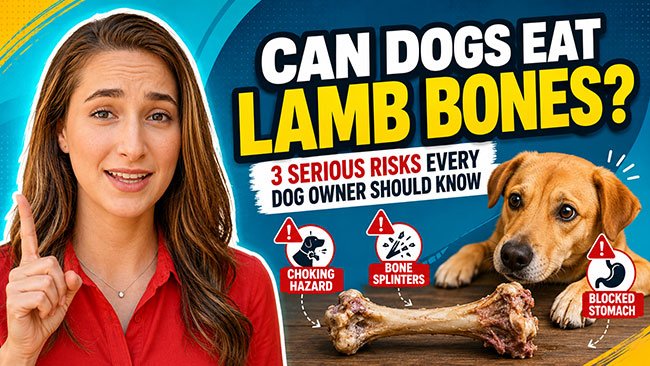
Can Dogs Eat Lamb Bones? 3 Serious Risks Every Dog Owner Should Know
Key Takeaways
- Dogs generally should not be given lamb bones because they can create safety risks, especially when bones are cooked, brittle, or swallowed in pieces.
- Lamb bones may cause choking, digestive blockages, tooth fractures, or injuries to the digestive tract.
- The risk depends on factors such as the type of bone, preparation method, your dog’s size, chewing style, and overall health.
- Cooked lamb bones are often considered higher risk because they can splinter more easily.
- If your dog has eaten a lamb bone, monitor closely and contact your veterinarian if concerning symptoms appear.
- Signs such as breathing difficulty, repeated vomiting, abdominal pain, blood in stool, or severe lethargy require veterinary attention.
- Safer chew options include veterinarian-approved dental chews and dog-specific chew products designed with safety in mind.
Can dogs eat lamb bones safely?
Many dog owners have wondered, “Can dogs eat lamb bones?” It is an understandable question. Bones seem natural, and many people have seen dogs happily chewing bones in movies, family kitchens, or outdoor settings.
The direct answer is: lamb bones are generally not considered a safe chew option for dogs because they can cause serious problems in some pets.
This does not mean every dog that eats a lamb bone will develop a complication. Some dogs may chew a bone without an immediate issue. However, veterinarians often recommend caution because the possible risks can be significant and sometimes require urgent treatment.
The idea that “natural means safe” does not always apply to dogs. A natural item can still be difficult for your pet’s body to handle. Lamb bones can be hard, break into sharp pieces, or become dangerous if your dog chews aggressively or swallows fragments.
The risk also depends on several factors, including:
- Whether the bone is cooked or raw
- The size and shape of the bone
- Your dog’s chewing habits
- Your dog’s age and dental health
- Whether your dog tends to swallow food quickly
- Any existing digestive conditions
Because each dog is different, the safest choice is usually to avoid offering lamb bones and choose alternatives made specifically for dogs.
Why are lamb bones risky for dogs?
Lamb bones can create several potential hazards. The three major concerns are choking or digestive blockages, dental injuries, and internal injuries from bone fragments.
Understanding these risks can help you make a safer decision for your pet.
Can lamb bones cause choking or digestive blockages?
Risk 1: Can lamb bones become stuck in a dog’s throat or digestive system?
One of the biggest concerns with lamb bones is the possibility of pieces becoming lodged somewhere in the body.
Dogs do not always chew bones into small, harmless pieces. Some dogs, especially enthusiastic chewers or dogs that tend to gulp food, may break off larger chunks and swallow them.
Bone fragments may become stuck in areas such as:
- The mouth or throat
- The esophagus (the tube that carries food to the stomach)
- The stomach
- The intestines
A blockage can prevent food and fluids from moving normally through the digestive tract. In some cases, this may require veterinary treatment or even surgery.
Smaller pieces may seem less concerning, but they can actually be easier for some dogs to swallow accidentally. A small dog may also have less room in the digestive tract, making certain objects more difficult to pass.
Signs of a possible choking problem or obstruction may include:
- Difficulty breathing
- Gagging or repeated coughing
- Difficulty swallowing
- Excessive drooling
- Repeated vomiting
- Loss of appetite
- Abdominal discomfort
- Straining to pass stool
Warning:
Cooked lamb bones can become brittle and may break into sharp fragments. These pieces can create a higher risk of becoming lodged or causing digestive irritation. If your dog is choking, struggling to breathe, repeatedly vomiting, or showing signs of severe distress, contact an emergency veterinarian immediately.
Can lamb bones break a dog’s teeth?
Risk 2: Can hard lamb bones damage a dog’s teeth?
Another important concern is dental injury. Many people assume that chewing bones naturally cleans teeth, but hard bones can be strong enough to fracture a dog’s teeth.
A broken tooth can be painful and may expose sensitive inner layers of the tooth. Once damaged, a tooth often cannot repair itself and may require veterinary treatment.
Dogs at increased risk of dental injuries may include:
- Dogs that chew aggressively
- Dogs that bite down with strong force
- Dogs with existing dental disease
- Older dogs with weakened teeth
Signs of a possible tooth injury include:
- Dropping the bone or chew repeatedly
- Chewing only on one side of the mouth
- Avoiding hard food
- Pawing at the mouth
- Excessive drooling
- Sudden changes in chewing behavior
A dog that appears interested in chewing does not always know when an item is too hard. Many dogs will continue chewing even when a tooth is being damaged.
Can lamb bones cause internal injuries?
Risk 3: Can lamb bones injure a dog’s digestive tract?
Lamb bones may also cause injuries if fragments become sharp after chewing or breaking.
Sharp pieces of bone can irritate the lining of the digestive system. In more serious situations, fragments may cause damage as they move through the gastrointestinal tract.
Cooked bones are a particular concern because cooking changes the structure of the bone. They may become more brittle and more likely to splinter into pieces with sharp edges.
Possible signs of digestive injury include:
- Vomiting
- Abdominal pain
- Weakness or unusual tiredness
- Loss of appetite
- Blood in stool
- Changes in bowel movements
Not every dog that eats a bone will experience these complications. However, because the consequences can be serious, prevention is often safer than waiting to see if a problem develops.
Warning:
If your dog has eaten a lamb bone and develops vomiting, abdominal pain, blood in stool, extreme tiredness, or difficulty passing stool, do not wait for symptoms to worsen. Contact your veterinarian for advice.
Are cooked lamb bones worse than raw lamb bones?
Many owners ask whether raw lamb bones are safer than cooked ones. The answer is that the risks are different, and neither option should be considered completely risk-free.
Are cooked lamb bones dangerous for dogs?
Cooked lamb bones are generally considered more concerning because heat can make bones more brittle. Brittle bones may break into sharp pieces that are easier to swallow and may cause injury.
Cooked bones from meals are especially risky because they are often:
- Leftover pieces from human food
- Smaller pieces from chops or ribs
- Seasoned with ingredients that may not be suitable for dogs
Are raw lamb bones safe for dogs?
Some owners choose raw bones because they believe they are softer or more natural. However, raw bones can still present risks, including choking, dental damage, digestive problems, and exposure to bacteria.
Veterinary opinions may vary regarding raw bones. Some professionals may discuss certain raw bone practices with owners, while others recommend avoiding them completely. The safest approach depends on your individual dog and should be discussed with your veterinarian.
What about recreational bones or meat-covered bones?
Large recreational bones are sometimes sold as dog chews, but they are not automatically safe. A bone that is too hard may damage teeth, while a bone that breaks apart may create swallowing risks.
Always consider your dog’s chewing behavior and health before offering any chew item.
What happens if a dog eats a lamb bone?
If your dog eats a lamb bone, try not to panic. Many dogs do not immediately show problems, but careful monitoring is important.
The first steps you can take are:
- Remove any remaining bone pieces to prevent additional swallowing.
- Note what type of bone your dog ate.
- Estimate how much was eaten and when it happened.
- Observe your dog for changes in behavior or symptoms.
- Contact your veterinarian if you are concerned.
Do not induce vomiting unless your veterinarian specifically instructs you to do so. Bringing a sharp bone fragment back up may create additional injury.
When speaking with your veterinarian, helpful information includes:
- Your dog’s weight and age
- The size and type of lamb bone
- Whether the bone was cooked or raw
- When your dog ate it
- Any symptoms already occurring
What symptoms should you watch for after a dog eats a lamb bone?
After a dog eats a lamb bone, monitor closely for signs that something may be wrong.
Contact your veterinarian if you notice:
- Vomiting or repeated attempts to vomit
- Difficulty swallowing
- Excessive drooling
- Loss of appetite
- Abdominal pain or a tense belly
- Lethargy or unusual weakness
- Straining to poop
- Blood in stool
- Difficulty breathing
- Restlessness or signs of discomfort
Some problems may appear quickly, while others may take time to develop. If your dog has eaten a lamb bone and you are unsure whether monitoring at home is appropriate, your veterinarian can help you decide the safest next step.
Warning:
Difficulty breathing, choking, collapse, severe abdominal pain, or repeated vomiting should be treated as urgent concerns. Seek veterinary care promptly if these signs occur.
Are there safer alternatives to lamb bones for dogs?
Many dogs enjoy chewing, and chewing can be a normal and beneficial behavior. The goal is not to remove chewing completely but to choose options that are designed with canine safety in mind.
Safer alternatives may include:
- Veterinarian-approved chew products
- Properly designed dental chews
- Dog-specific treats made for chewing
- Toys created for your dog’s size and chewing strength
No chew item is perfect for every dog. A strong chewer may destroy items quickly, while a senior dog may need a softer option.
Always supervise your dog with new chew products and replace items that become damaged or small enough to swallow.
Which dogs should avoid lamb bones completely?
Some dogs have a higher chance of complications from chewing or swallowing bones.
Lamb bones may be especially inappropriate for:
- Puppies whose teeth and jaws are still developing
- Senior dogs with weaker teeth
- Dogs with dental disease
- Dogs that aggressively chew
- Dogs that swallow food without chewing
- Dogs with digestive disorders
- Dogs with previous intestinal problems
Large dogs are not automatically safe with lamb bones. A bigger dog may be able to break a bone more easily, which can actually increase the chance of swallowing fragments.
Your dog’s size matters, but behavior and health history matter just as much.
Frequently Asked Questions
Can dogs eat cooked lamb bones?
Dogs should generally avoid cooked lamb bones because they may become brittle and break into sharp pieces. These fragments can create risks such as choking, digestive blockage, or internal injury. If your dog has eaten a cooked lamb bone, monitor for symptoms and contact your veterinarian with concerns.
Can dogs eat raw lamb bones?
Raw lamb bones may be less brittle than cooked bones, but they are not completely risk-free. They can still cause choking, tooth fractures, digestive problems, or bacterial exposure. Whether a raw bone is appropriate depends on your dog’s health, chewing behavior, and veterinary guidance.
What should I do if my dog swallowed a lamb bone?
If your dog swallowed a lamb bone, remove any remaining pieces and observe carefully. Do not make your dog vomit unless instructed by a veterinarian. Contact your veterinary clinic for advice, especially if the bone was large, cooked, or your dog develops symptoms.
Are lamb bones safe for puppies?
Lamb bones are generally not recommended for puppies. Puppies have developing teeth and digestive systems, and they may be more likely to damage teeth, swallow pieces, or experience complications. Ask your veterinarian about age-appropriate chew options designed for growing dogs.
Can large dogs eat lamb bones?
Large dogs are not automatically safe with lamb bones. Bigger dogs may chew harder and break bones into pieces more easily. Their size may reduce some risks but does not eliminate concerns such as tooth fractures, choking, or digestive injuries.
How long after eating a lamb bone can problems appear?
Problems after eating a lamb bone may appear within hours, but some complications can take longer to develop. Symptoms depend on the type of bone, the amount eaten, and the individual dog. Continue monitoring your dog and contact your veterinarian if concerning signs appear.
What are signs of a blockage from a bone?
Possible signs of a blockage include vomiting, loss of appetite, abdominal pain, lethargy, difficulty passing stool, or repeated straining. Some dogs may also show restlessness or discomfort. If you suspect a blockage, contact your veterinarian promptly because untreated obstructions can become serious.
What are safer alternatives to lamb bones?
Safer alternatives include veterinarian-approved dental chews, dog-specific chew toys, and treats made for canine use. The best option depends on your dog’s size, chewing style, age, and health. Your veterinarian can recommend products that match your dog’s individual needs.
Conclusion
Lamb bones may seem like a natural treat, but they are not always a safe choice for dogs. The main concerns are choking or blockages, broken teeth, and injuries caused by bone fragments.
Some dogs may chew bones without immediate problems, but the risks can be unpredictable. Choosing safer chew options designed for dogs can help satisfy your pet’s natural chewing behavior while reducing avoidable hazards.
The best choice depends on your individual dog, including their age, health, chewing habits, and history.
When Should You Speak With Your Veterinarian?
Talk with your veterinarian if:
- Your dog has eaten a lamb bone
- Your dog has medical conditions
- Your dog has a history of digestive problems
- Your dog is a puppy or senior dog
- Your dog is an aggressive chewer
- You are unsure whether a chew item is appropriate
When you are uncertain, your veterinarian can help you choose the safest option for your pet and provide guidance based on your dog’s specific needs.