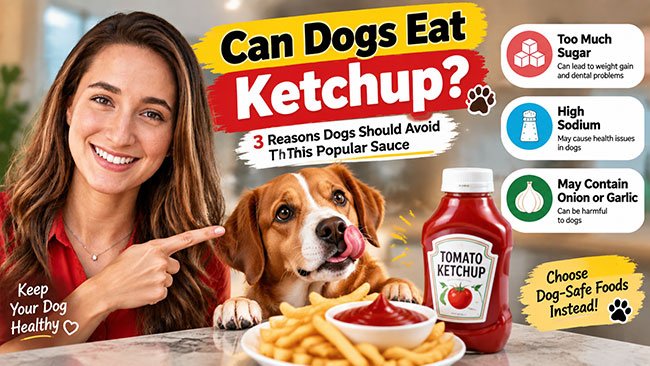
Can Dogs Eat Ketchup? 3 Reasons Dogs Should Avoid This Popular Sauce
Key Takeaways
- Dogs should generally avoid ketchup because it is not a healthy food choice and may contain ingredients that can cause problems.
- The main concerns with ketchup are added sugar, high sodium levels, and potentially harmful seasonings such as onion or garlic powder.
- A small accidental lick of ketchup is unlikely to cause serious issues in many healthy dogs, but regular feeding is not recommended.
- Always check the ingredient label because ketchup recipes vary between brands.
- Dogs with diabetes, obesity, kidney problems, pancreatitis history, or sensitive stomachs may have a higher risk from unsuitable foods.
- If your dog eats a large amount of ketchup or shows symptoms like vomiting, diarrhea, weakness, or unusual behavior, contact your veterinarian.
Can dogs eat ketchup?
Many dog owners have wondered whether their pet can share a small taste of ketchup from their plate. Since dogs often show interest in human foods, it is common for owners to ask, “Can dogs eat ketchup?” before offering a little bite.
The short answer is dogs should generally avoid ketchup. Most commercial ketchup is made for human taste preferences, not canine nutrition. It often contains added sugar, high levels of sodium, and sometimes ingredients such as onion or garlic powder that may be unsuitable for dogs.
However, accidentally licking a small amount of ketchup does not automatically mean your dog is in danger. The level of concern depends on factors such as how much was eaten, your dog’s size, the ketchup ingredients, and your dog’s overall health.
Ketchup is best treated as a food dogs do not need. There are healthier and safer options available if you want to give your dog an occasional treat.
Can dogs eat ketchup safely?
Dogs can technically consume a small amount of ketchup without immediate problems in many cases, but ketchup is not considered a safe or beneficial treat for regular feeding.
Unlike dog-friendly foods that provide useful nutrients, ketchup mainly adds flavor for humans. It contains ingredients that dogs do not need, including sugar, salt, and artificial flavors or preservatives in some products.
A tiny accidental lick from a dropped french fry or a plate is usually different from intentionally giving your dog ketchup as a topping or treat. Occasional small exposure may not cause harm in a healthy dog, but repeated consumption can increase health risks over time.
Dogs have different nutritional needs than humans, so foods that are common in our diets are not always appropriate for them.
Why should dogs avoid ketchup?
Does ketchup contain too much sugar for dogs?
Yes, many commercial ketchup products contain added sugar, which is one reason dogs should avoid it.
Dogs do not need added sugar in their diet. While a small amount may not immediately harm a healthy dog, frequent exposure can contribute unnecessary calories and may create long-term health concerns.
Why does sugar matter for dogs?
Added sugar can contribute to:
- Weight gain
- Increased calorie intake
- Poor dental health
- Higher risks for dogs already struggling with weight management
Overweight dogs may be more sensitive to extra calories from foods like ketchup. Dogs with diabetes or blood sugar regulation problems may also require stricter dietary control.
What should dog owners do?
Instead of using ketchup as a food topper, choose dog-safe alternatives that provide better nutrition. If your dog accidentally eats a small amount, monitor them and avoid giving more.
Can ketchup’s high sodium content harm dogs?
Yes, ketchup can contain more sodium than dogs need, especially when eaten in larger amounts.
Sodium is an essential mineral that helps support normal body functions, including fluid balance and nerve activity. However, too much salt can cause health problems.
Why is too much salt a concern?
Excessive sodium intake may lead to digestive upset or signs of salt imbalance, especially if a dog consumes a large quantity.
Possible signs of excessive salt consumption include:
- Excessive thirst
- Increased urination
- Vomiting
- Diarrhea
- Weakness
- Tremors in severe situations
The risk depends on the amount consumed and the size of the dog. A small dog that eats a large amount of salty food may be more affected than a larger dog that consumes the same amount.
What should you do?
If your dog eats a large quantity of ketchup or other salty foods, monitor them closely and contact your veterinarian if symptoms develop.
Can ketchup ingredients like onion or garlic be dangerous for dogs?
Yes, some ketchup products may contain ingredients that are concerning for dogs, including onion or garlic powder.
Onions and garlic belong to the Allium family, which can affect dogs by damaging red blood cells when consumed in harmful amounts. The risk depends on the amount eaten, the concentration of the ingredient, and the dog’s size.
Why do ketchup labels matter?
Not every ketchup brand has the same recipe. Some may contain:
- Onion powder
- Garlic powder
- Seasoning blends
- Artificial additives
Even when these ingredients are listed in small amounts, it is important to understand that repeated exposure or larger consumption may increase risk.
What should owners check?
Always read the ingredient label before sharing human foods with your dog. If your dog consumes ketchup containing onion or garlic ingredients, consider contacting your veterinarian for advice, especially if your dog ate more than a small taste.
⚠️ Warning: Check ketchup ingredients carefully
Some ketchup varieties may contain onion or garlic powder.
Watch for signs such as:
- Weakness
- Loss of appetite
- Vomiting
- Diarrhea
- Pale gums
- Unusual tiredness
Contact your veterinarian if your dog consumes a significant amount or develops concerning symptoms.
Is a small amount of ketchup dangerous for dogs?
A small accidental lick of ketchup is usually not considered an emergency for many healthy dogs.
For example, if your dog licks a small amount from your plate, the most likely outcome may be no noticeable reaction or mild stomach upset. However, ketchup should not become a regular part of your dog’s diet.
The concern increases when:
- Your dog eats a large amount
- Your dog is very small
- The ketchup contains onion or garlic ingredients
- Your dog has existing health conditions
The best approach is to avoid intentionally feeding ketchup while staying calm if accidental exposure happens.
⚠️ Warning: When a larger amount of ketchup is eaten
Eating a large quantity of ketchup may increase the chance of problems from sugar, sodium, or other ingredients.
Monitor your dog for:
- Vomiting
- Diarrhea
- Excessive thirst
- Weakness
- Tremors
- Changes in behavior
If your dog consumes a large amount, contact your veterinarian for guidance.
What should you do if your dog eats ketchup?
If your dog eats ketchup, follow these steps:
1. Should you stay calm?
Yes. A small accidental amount is not always dangerous. Avoid panicking and focus on gathering information.
2. How much ketchup did your dog eat?
Try to estimate:
- Amount consumed
- Time it happened
- Your dog’s size and weight
3. Should you check the ingredient label?
Yes. Look for ingredients such as:
- Onion powder
- Garlic powder
- High sodium content
- Artificial sweeteners
4. Should you monitor your dog?
Yes. Watch for signs of digestive upset or unusual symptoms.
5. When should you call a veterinarian?
Contact your veterinarian if:
- Your dog ate a large amount
- Your dog shows concerning symptoms
- The ketchup contained onion or garlic
- Your dog has health conditions that increase risk
Are there dogs that should never eat ketchup?
Some dogs should avoid ketchup completely because they may be more sensitive to its ingredients.
Should diabetic dogs avoid ketchup?
Yes. Dogs with diabetes may need carefully controlled diets, and added sugar from ketchup may interfere with nutritional management.
Should overweight dogs avoid ketchup?
Yes. Ketchup provides extra calories without meaningful nutritional benefits and may make weight control more difficult.
Should dogs with pancreatitis avoid ketchup?
Dogs with a history of pancreatitis often require careful dietary management. Foods high in unnecessary ingredients or fat may not be appropriate.
Should dogs with kidney problems avoid ketchup?
Dogs with kidney disease may require specific sodium limits, so salty foods like ketchup should only be given if approved by a veterinarian.
Are dog-friendly alternatives better than ketchup?
Yes. If you want to add variety to your dog’s meals, there are safer options than ketchup.
Depending on your dog’s health and diet, alternatives may include:
- Plain cooked vegetables that are safe for dogs
- Dog-specific treats
- Veterinary-approved food toppers
- Small portions of dog-safe fresh foods
Treats and extras should generally make up only a small part of your dog’s daily diet.
⚠️ Warning: Salt-related symptoms need attention
If your dog eats a large amount of salty ketchup or other salty foods, watch for:
- Excessive drinking
- Frequent urination
- Vomiting
- Diarrhea
- Weakness
- Tremors
Seek veterinary advice if symptoms appear or if you are concerned about the amount consumed.
When should you ask your veterinarian?
You should contact your veterinarian if:
- Your dog ate a large amount of ketchup
- The ketchup contained onion or garlic powder
- Your dog shows unusual symptoms
- Your dog has diabetes, kidney disease, obesity, pancreatitis history, or another health condition
Your veterinarian can provide advice based on your dog’s size, health status, and the specific ingredients involved.
Frequently Asked Questions
Can dogs eat ketchup in small amounts?
A small accidental lick of ketchup is unlikely to cause serious problems for many healthy dogs. However, ketchup is not recommended as a regular treat because it contains added sugar, sodium, and sometimes ingredients that may not be suitable for dogs.
What happens if my dog licks ketchup?
If your dog only licks a small amount of ketchup, they may have no reaction at all. Some dogs may experience mild stomach upset. Monitor your dog and contact a veterinarian if symptoms appear or if a large amount was consumed.
Can puppies eat ketchup?
No, puppies should not be given ketchup. Puppies need balanced nutrition for healthy growth, and ketchup provides unnecessary sugar, salt, and additives. A small accidental lick is usually not a major concern, but intentional feeding should be avoided.
Is tomato ketchup toxic to dogs?
Tomato ketchup is not always directly toxic to dogs, but it is not considered a healthy food choice. The main concerns are added sugar, sodium, and possible ingredients like onion or garlic powder that may create health risks.
Can dogs eat ketchup with onion powder?
Dogs should avoid ketchup containing onion powder. Onion and garlic ingredients can be harmful to dogs depending on the amount consumed and the dog’s size. Check ingredient labels and contact your veterinarian if your dog eats a significant amount.
How much ketchup is dangerous for dogs?
There is no single amount that is dangerous for every dog because risk depends on body size, ingredients, and health status. A large amount is more concerning than a small lick. Contact your veterinarian if your dog consumes a lot.
What should I do if my dog ate ketchup?
First, determine how much ketchup your dog ate and check the ingredients. Monitor for symptoms such as vomiting, diarrhea, excessive thirst, or weakness. Contact your veterinarian if your dog ate a large amount or shows concerning signs.
Are there safer alternatives to ketchup for dogs?
Yes. Safer choices include dog-friendly treats, approved food toppers, and certain plain vegetables. These options provide variety without the unnecessary sugar, salt, and additives commonly found in ketchup.
Final Thoughts
So, can dogs eat ketchup? While a small accidental lick is unlikely to harm many healthy dogs, ketchup is not a recommended food for pets.
The main reasons dogs should avoid ketchup are:
- Added sugar that provides unnecessary calories
- High sodium levels that may cause problems in larger amounts
- Possible harmful ingredients such as onion or garlic powder
Choosing dog-safe foods instead of human condiments helps support your dog’s long-term health. If your dog accidentally eats ketchup, stay calm, check the ingredients, consider the amount consumed, and seek veterinary advice when needed.