Not Every Dog With Liver Disease Has Yellow Eyes: What Veterinarians Look for Beyond Jaundice
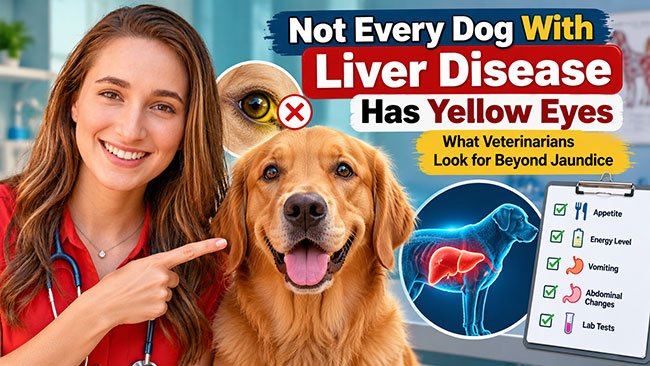
When people think about liver disease in dogs, yellow eyes often come to mind. It is one of the more recognizable warning signs, and for good reason. Jaundice can develop when the body accumulates bilirubin, a pigment that the liver normally helps process and eliminate.
But a dog does not need to have yellow eyes to have a liver problem. Some dogs continue eating, playing, and behaving almost normally despite developing liver abnormalities. Others show changes that are easy to mistake for ordinary digestive trouble, aging, or a temporary illness.
That uncertainty is one reason veterinarians rarely depend on a single symptom when evaluating liver health. They look at the dog’s history, examine patterns of illness, interpret laboratory results, and sometimes use imaging or additional testing to understand what is happening.
For dog owners, knowing what goes into that assessment can make it easier to recognize concerning changes without jumping to conclusions.
Why Yellow Eyes Aren’t the Only Clue to Liver Disease
The liver performs several jobs that keep a dog’s body functioning properly. It helps process nutrients, produces bile for digestion, metabolizes medications, stores certain vitamins and minerals, and manufactures proteins needed for normal blood clotting.
Because the organ is involved in so many processes, liver problems can affect different parts of the body.
What Jaundice Actually Tells Veterinarians
Jaundice develops when bilirubin accumulates in the bloodstream and tissues. Bilirubin forms naturally as aging red blood cells are broken down. The liver processes it so the body can eliminate it through bile.
When this process is disrupted, yellow discoloration may appear in the whites of the eyes, gums, skin, or inner ears. However, jaundice is not exclusive to liver failure. Veterinarians also consider conditions involving excessive red blood cell destruction and diseases that interfere with normal bile flow. These problems can produce similar outward changes despite having different underlying causes. Just as importantly, some dogs with liver disease never develop visible jaundice.
Cornell University College of Veterinary Medicine notes that chronic hepatitis in dogs can cause only vague clinical signs in its early stages. As liver disease progresses, complications can include jaundice, abdominal fluid accumulation known as ascites, hepatic encephalopathy, and problems with normal blood clotting. This variability is why normal-looking eyes cannot rule out liver disease.
Liver Disease, Liver Failure, and Liver Cancer Are Different Conditions
These terms are often confused, but they do not mean the same thing. Liver disease describes a broad range of disorders affecting the organ, including inflammation, infections, copper-associated disease, and tumors.
Liver failure is a severe condition in which the liver loses enough functional capacity that it can no longer adequately perform essential tasks. Liver cancer involves malignant tumors that originate in the liver or spread there from another location.
A dog can have liver disease without experiencing liver failure. Likewise, a liver mass does not automatically mean cancer, and a cancer diagnosis does not necessarily mean the liver has stopped functioning. Veterinarians need to establish which condition is present because treatment options and outcomes can differ substantially.
When Everyday Symptoms Don’t Point to One Clear Cause
Dogs cannot explain that they feel nauseated, weak, or uncomfortable. Owners usually notice illness through changes in ordinary behavior. Many early signs associated with liver disease also occur with unrelated conditions.
Appetite Changes, Weight Loss, and Unusual Fatigue
A dog that normally finishes every meal may begin leaving food in its bowl. Another might continue eating but gradually lose weight. Vomiting, diarrhea, reduced appetite, and low energy can accompany liver disease, but these signs do not identify the liver as the cause.
Dental pain, intestinal disorders, infections, kidney disease, and other illnesses can produce similar changes. Veterinarians therefore consider the broader pattern.
A dog that skips one meal but otherwise behaves normally is different from one that has been eating progressively less, losing weight, and becoming increasingly lethargic.
The duration, severity, and combination of symptoms help determine which possibilities require investigation.
Increased Thirst and Changes in Bathroom Habits
Some dogs with liver disease drink more water and urinate more frequently. An owner might notice the water bowl emptying faster, additional requests to go outside, or accidents in a previously house-trained dog.
These changes are worth discussing with a veterinarian, but they do not identify liver disease on their own. Diabetes mellitus, kidney disease, hormonal disorders, medications, and other conditions can also affect thirst and urination.
Veterinarians may use blood tests and urinalysis to investigate liver disease alongside other possible causes. This is particularly important when symptoms develop gradually, and there is no obvious emergency.
How Veterinarians Investigate Possible Liver Problems
A veterinary examination involves more than checking whether the dog’s eyes appear yellow.
The aim is to determine whether there is evidence of liver injury, whether the organ’s function has been affected, and whether another illness could explain the findings.
What Blood Tests Can Reveal About Liver Health
Blood chemistry testing is often an important part of the investigation. Two frequently measured enzymes are alanine aminotransferase (ALT) and alkaline phosphatase (ALP).
ALT can increase when liver cells are injured. ALP may rise with cholestasis, which means impaired bile flow, but it can also increase because of medications, hormones, or conditions outside the liver.
The American College of Veterinary Internal Medicine’s chronic hepatitis consensus distinguishes liver-enzyme activity from tests used to assess hepatic function. An elevated ALT or ALP result can signal liver injury or altered bile flow without showing how well the liver is performing overall.
Veterinarians therefore interpret enzymes alongside other measurements, including bilirubin, albumin, glucose, and sometimes bile acids.
Albumin is made by the liver, so a low level can contribute to concern about reduced liver function. However, kidney disease, gastrointestinal protein loss, and other conditions can also lower albumin. Bile-acid testing can provide additional information about liver function or abnormal blood flow around the liver in appropriate cases.
Taken together, these tests answer different questions: enzymes can point to injury or altered bile flow, function-related measurements help show how well the liver is coping, imaging shows structure, and biopsy can identify disease at the tissue level.
These results provide important clues, but they may not identify the exact disorder by themselves.
Why Ultrasound May Be Recommended
If laboratory results or physical examination findings suggest a liver problem, a veterinarian may recommend abdominal ultrasound. Ultrasound can assess liver size, structure, and appearance and may identify gallbladder abnormalities, bile-flow obstruction, surrounding-organ changes, or liver masses.
Finding a mass does not establish whether it is benign or malignant. An owner who searches for the phrase liver cancer in dogs after hearing about an abnormal liver finding may encounter information about liver failure, but the conditions should not be confused.
Cancer is only one possible explanation for a liver abnormality. A 2013 study comparing ultrasound findings with histopathology in 138 dogs found that hepatic masses raised concern for neoplasia but also occurred with noncancerous conditions, confirming that ultrasound findings alone do not establish the diagnosis.
Imaging helps show where further investigation is needed, but it does not answer every diagnostic question.
What Happens When Initial Results Are Unclear
Not every abnormal liver result leads immediately to a definitive diagnosis.
Sometimes the best next step is monitoring. In other situations, additional tests are necessary because the dog’s condition or examination findings suggest a more significant problem.
Why One Abnormal Blood Test May Not Tell the Whole Story
Liver enzyme elevations can reflect direct liver injury, altered bile flow, medication or hormone effects, or illnesses outside the liver. Veterinarians consider the size and pattern of the elevations, other laboratory results, the dog’s symptoms, and whether the abnormalities persist.
Previous laboratory results can be especially useful. An enzyme level that remains elevated over several months may call for a different investigation from a temporary increase that resolves after another illness.
The American College of Veterinary Internal Medicine’s consensus statement notes that chronic hepatitis can have a long subclinical phase and that early clinical signs are often vague and nonspecific.
The same consensus explains that diagnosis requires integrating clinical findings, laboratory testing, imaging, and hepatic biopsy when a definitive tissue diagnosis is needed.
When a Liver Biopsy Becomes Necessary
A liver biopsy involves collecting tissue so a veterinary pathologist can examine it. A biopsy may be considered when veterinarians suspect chronic hepatitis, abnormal copper accumulation, certain tumors, or another disorder that blood tests and imaging cannot identify reliably.
Not every dog with an abnormal liver enzyme result needs a biopsy. The decision depends on the suspected condition, the dog’s overall health, and whether tissue results are likely to change treatment.
Because severe liver disease can affect proteins involved in blood clotting, veterinarians assess bleeding risk before collecting liver tissue. The American College of Veterinary Internal Medicine’s consensus recommends checking platelet count, clotting times, fibrinogen, and related risk factors before hepatic sampling in dogs with chronic hepatitis.
The goal is to obtain information that meaningfully improves diagnosis and treatment planning while minimizing unnecessary procedures.
Warning Signs That Should Never Be Ignored
Some liver abnormalities are discovered during routine appointments. Others occur alongside symptoms that require urgent attention.
Owners should understand the difference between observations that warrant scheduling an examination and signs that may indicate an emergency.
Yellow Gums, Abdominal Swelling, and Unexplained Bleeding
Yellow discoloration of the eyes or gums should prompt veterinary assessment. A noticeably enlarged abdomen is also concerning, particularly if swelling develops rapidly or accompanies weakness, vomiting, or discomfort.
Fluid accumulation within the abdomen, known as ascites, can occur with advanced liver disorders, although heart disease and other serious conditions can also cause abdominal fluid.
Unexplained bruising, nosebleeds, bloody vomit, or black, tarry stools also require prompt veterinary attention.
The liver produces many proteins involved in normal clotting, and severe liver disease can disrupt that system. The American College of Veterinary Internal Medicine’s consensus describes bleeding tendencies and coagulation abnormalities as recognized complications of canine chronic liver disease.
These findings should not simply be watched for several days without veterinary contact. Rapid abdominal enlargement, significant active bleeding, marked weakness, collapse, or breathing difficulty warrant emergency care.
Confusion, Stumbling, and Seizures
Serious liver disorders can sometimes affect neurological function. One complication, hepatic encephalopathy, is a neurological syndrome associated with poor liver function or abnormal blood vessels that divert blood around the liver.
The American College of Veterinary Internal Medicine’s consensus identifies hepatic encephalopathy as a complication of advanced chronic hepatitis and acquired portosystemic shunting. Affected dogs may appear confused, walk unsteadily, pace without purpose, or behave unusually.
Severe cases can involve seizures, collapse, or loss of consciousness. Because poisoning, metabolic disturbances, and brain disorders can produce similar signs, the cause cannot be determined from behavior alone.
Sudden confusion, seizures, collapse, or loss of consciousness requires urgent veterinary evaluation.
Helping Your Veterinarian Understand What’s Changed
An owner’s observations often provide information that cannot be captured during a short appointment. Changes in appetite, drinking habits, behavior, or weight can help establish when a problem began and whether it is progressing.
Keep Track of Changes Without Trying to Diagnose Them
If a dog has been behaving unusually, it can help to record a few details before the veterinary visit.
Useful observations include:
- When the dog first began eating less or showing reduced energy.
- Whether drinking and urination have increased.
- How frequently vomiting or diarrhea occurs.
- Any recent weight loss or change in abdominal appearance.
- Episodes of stumbling, unusual behavior, or confusion.
- Whether symptoms seem constant or come and go.
Photographs or short videos can also be useful when a symptom is difficult to reproduce during an examination. Owners do not need to maintain an elaborate health diary. A few accurate observations can be more valuable than vague descriptions.
For urgent symptoms, however, seeking immediate care is more important than collecting additional information.
Mention Medications and Possible Toxic Exposures
Veterinarians also need a complete picture of what a dog might have consumed. Prescription drugs, over-the-counter medications, supplements, household products, and foods can affect a dog’s health or laboratory results.
Some exposures can cause serious illness, including liver injury. The U.S. Food and Drug Administration warns that xylitol poisoning in dogs can cause liver failure and bleeding problems.
If a dog may have swallowed a harmful substance, owners should contact a veterinarian, emergency animal clinic, or animal poison-control service immediately. Do not induce vomiting or give home remedies unless a veterinary professional specifically instructs you to do so.
It is also important not to stop prescribed medications or begin supplements marketed for liver health without veterinary guidance. A treatment that is appropriate for one liver disorder may be ineffective or unsuitable for another.
Paying Attention Without Jumping to Conclusions
Liver disease in dogs does not always produce dramatic symptoms. Some abnormalities are discovered through routine blood testing, while others come to attention after weeks of subtle changes. Jaundice remains an important warning sign, but its absence does not establish that a dog’s liver is healthy.
At the same time, common symptoms such as fatigue, reduced appetite, or increased thirst should not be interpreted as proof of liver disease. The difference lies in careful veterinary assessment.
Medical history, laboratory testing, physical examination, and appropriate imaging help veterinarians distinguish liver injury from impaired function and identify conditions that may require treatment.
For owners, the responsibility is simpler: recognize meaningful changes, describe them accurately, and seek professional care when something does not seem right.
A dog does not need yellow eyes before a health concern deserves attention. Sometimes the most useful clue is a change in an otherwise familiar daily routine.