How Does a GPS Dog Fence Help Dog Owners Manage Boundary Training on Uneven Land?
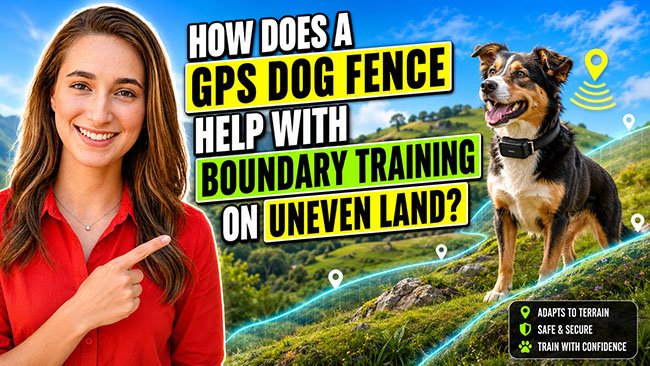
Boundary training can feel more complicated when a yard is not flat or easy to read. Hills, dips, wooded edges, rocky patches, and sloped ground can make it harder for dog owners to create a clear training pattern that feels consistent from one section of the property to another. Dogs do not experience uneven land the way people see it from a porch or driveway. They respond to movement, scent, distraction, and momentum. A GPS-based system can help create a more understandable framework for training by giving owners a steadier way to define space across land that shifts in height and shape.
How GPS Boundary Training Works on Sloped Terrain
Training on sloped or uneven land follows the same core principles as training on flat ground, but the process needs a bit more patience and repetition. The goal is to help the dog recognize the boundary as one continuous edge, even when the terrain shifts from open lawn to hillside to wooded corner. A GPS dog fence supports that goal by keeping the boundary shape steady regardless of what the ground looks like underneath.
1. Clear Boundaries Matter More When the Land Feels Irregular
On uneven land, the biggest training challenge is often consistency. A dog may move confidently across one section of the property, then become more distracted near a slope, tree line, or low area where scents collect and visibility changes. Traditional visual cues alone may not give the dog a reliable sense of where freedom ends, especially if the land has natural turns or changing elevation that make the yard feel different from one step to the next. That is where a training system tied to a digital boundary can be useful. A GPS dog fence helps create one continuous training edge even when the ground itself looks inconsistent to both the dog and the owner. Instead of relying solely on physical landmarks that appear different from each angle, the owner can reinforce the same boundary across high spots, low areas, and irregular terrain. That consistency matters because dogs often learn faster when the message does not change just because the landscape does.
2. Owners Gain More Control Over the Training Pattern
Another reason GPS-based boundaries help on uneven land is that they allow owners to shape the training area around the actual property rather than forcing the dog to adapt to a rough visual guess. Sloped yards and irregular lots can make it difficult to imagine a training line that stays fair and understandable for the dog. One section may feel too close to a drop, another too open, and another too near a tempting edge where wildlife or neighboring activity keeps drawing attention. A GPS gives owners a more defined pattern to work with, so the dog is not receiving mixed signals from different parts of the property. This helps the training process feel more intentional. Instead of correcting one behavior near the hill and another near the side yard, the owner can repeat the same lesson in multiple directions with more confidence. Over time, that repetition can reduce hesitation for the owner as much as for the dog. Training becomes less about reacting in the moment and more about guiding the dog through a boundary with a steady shape, even when the ground itself feels unpredictable underfoot.
3. Uneven Land Creates More Natural Distractions for Dogs
Boundary training on flat, open ground is one challenge, but uneven land adds layers of distraction that can make a dog’s behavior harder to predict. A downhill section may invite running speed. A wooded rise may hold animal scent longer. A shallow dip may block the dog’s line of sight and make the property feel more hidden or adventurous. In those situations, dogs often become less focused on the owner and more interested in movement, smell, and momentum. A GPS-based boundary helps because it gives the owner a way to repeat the same lesson across all of those changing conditions. The dog does not need to learn one rule for the top of the hill and a different one for the lower corner of the yard. Instead, the owner can reinforce a single boundary concept while gradually exposing the dog to the full variety of the land. That repetition can support steadier behavior because the rule remains consistent even while the surroundings feel different. This is especially useful for active dogs that become more excited when the terrain itself encourages chasing, exploring, or fast movement.
4. Training Can Feel Safer and More Manageable for the Household
A major benefit of using a GPS boundary system on uneven terrain is that it can help owners feel calmer during training. Many people become uncertain when their property includes slopes, wooded edges, drainage areas, or awkward corners because they worry about whether the dog truly understands where to stop. That uncertainty can lead to inconsistent corrections, delayed timing, or a training style that changes from one day to the next. A GPS-based setup can reduce some of that uncertainty by giving the household a more dependable reference point for repetition. When owners feel more confident, their training usually becomes steadier. They can spend less energy second-guessing the shape of the yard and more energy focusing on the dog’s reactions, pace, and progress. This also helps other family members participate more effectively because the training message is easier to understand and repeat. In homes where several people handle the dog, that consistency can make a noticeable difference. The yard may still be uneven, but the training approach begins to feel more stable, which can improve both safety and follow-through over time.
5. Better Boundaries Support More Everyday Freedom
One of the long-term goals of boundary training is not simply stopping escape. It is helping the dog enjoy the outdoor space in a way that feels structured and dependable. On uneven land, that goal can be harder to reach because the property may naturally encourage wandering, chasing, or cutting across areas that are hard to supervise closely. A GPS dog fence can support more everyday freedom by helping the dog understand where movement is welcome and where it should slow down or turn back. That understanding usually takes repetition, patience, and clear handling, but a consistent training boundary can make the process smoother. As the dog becomes more familiar with the space, outdoor time can feel less stressful for the owner and more natural for the dog. The yard stops feeling like a confusing patchwork of slopes and tempting edges and starts feeling like a place with understandable limits. That kind of clarity can make daily exercise, play, and outdoor routines more manageable, especially on properties where the ground itself makes boundary learning more difficult than on a flat lawn.
Consistency Helps Uneven Yards Feel More Usable
A GPS dog fence helps dog owners manage boundary training on uneven land by creating clearer limits across hills, dips, and irregular property lines that might otherwise confuse both the dog and the household. It supports consistency where the landscape does not, and that consistency can make training feel calmer, safer, and easier to repeat from one area to another. Uneven ground will always bring extra distractions and movement challenges, but a more stable training framework can help dogs learn the property with greater confidence; for many owners, that makes the outdoor space feel more usable and far less stressful.
Frequently Asked Questions
How accurate is a GPS dog fence on uneven or hilly terrain?
Modern GPS dog fences are accurate enough for most uneven properties, though performance can vary slightly depending on tree cover, elevation changes, and satellite signal strength. On heavily wooded slopes or deep valleys, the boundary may shift by a few feet, which is why a small buffer zone is usually recommended when setting up the perimeter. For open uneven land like rolling fields or gently sloped yards, the accuracy is generally reliable enough to support consistent boundary training without frequent adjustments.
Can a GPS dog fence be used on properties with wooded areas or dense tree cover?
Yes, GPS dog fences work on wooded properties, but dense tree cover can occasionally weaken the signal. The most effective approach is to walk the perimeter during setup to test the boundary in the areas with the heaviest coverage and adjust the buffer zone if needed. For properties with a mix of open yard and woods, most owners find the system works well overall, especially when the training process gradually introduces the dog to the boundary across different sections of the land.
How long does GPS dog fence training take on uneven land?
Training a dog on uneven land usually takes two to four weeks, slightly longer than training on a flat yard. The extra time helps the dog learn the boundary across all of the different terrain conditions, including slopes, dips, and wooded corners. Short, consistent sessions work best, with the trainer walking the same routes multiple times so the dog can associate the warning tone with the edge of the property regardless of the ground beneath them. Patience during this phase pays off in long-term reliability.


