The Dog Pulls on the Leash. Your Feet Don’t Feel Steady Anymore
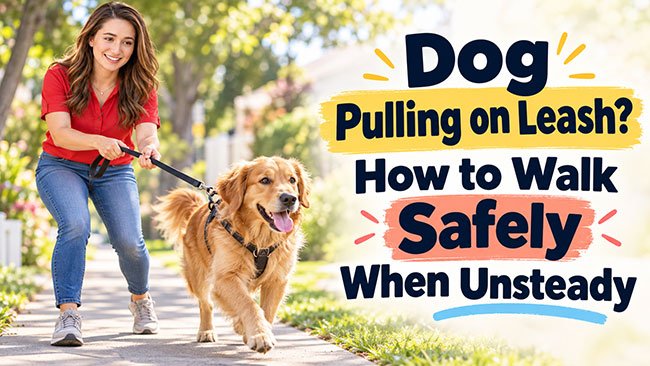
Your dog sees a squirrel and suddenly pulls toward the other side of the sidewalk. A few years ago, you would have tightened your grip, adjusted your footing, and kept walking. Now, that same movement leaves you scrambling to regain your balance.
Maybe your feet feel slightly numb inside your shoes. Perhaps you have started watching the pavement more carefully or avoiding the uneven grass where your dog likes to sniff. Nothing dramatic has happened, but walking together no longer feels quite as effortless.
It’s easy to blame an energetic dog, an uneven sidewalk, or simply getting older. Yet changes in foot sensation and balance can sometimes signal an underlying health problem.
Understanding what has changed matters not only for your safety but also for maintaining the daily routines that keep your dog active and engaged.
When an Ordinary Dog Walk Starts Feeling Unsteady
Walking a dog involves more than moving forward at a comfortable pace. Dogs stop unexpectedly, change direction, investigate unfamiliar smells, and occasionally pull toward something interesting.
Most people make small balance adjustments without consciously thinking about them. However, when those adjustments become difficult, even a familiar walk can feel unpredictable.
The Small Changes Owners Notice During a Walk
Balance difficulties don’t always begin with an obvious fall. Someone might notice that stepping off a curb requires more concentration than before. They may hesitate when their dog crosses in front of them or feel uncomfortable walking across wet grass.
Other subtle changes include looking down more frequently, taking shorter steps, or needing a moment to regain stability after stopping. Notice whether the problem occurs only during a sudden pull or also when walking without your dog.
No single change establishes a neurological disorder. A pattern that persists or worsens deserves medical attention.
Why Sudden Stops and Turns Can Expose Balance Problems
When a dog pulls sideways, the force can shift the owner’s center of gravity before they have time to prepare. A sideways step onto a curb adds the problem of finding secure footing at the same moment.
A person with normal strength, sensation, and coordination can often respond by repositioning a foot or adjusting their posture. Someone with impaired sensation or balance may have more difficulty making that correction.
A 2023 study published in Medicine & Science in Sports & Exercise examined dog-walking injuries treated in U.S. emergency departments between 2001 and 2020. In that dataset, 55% of injuries involved a fall after being pulled or tripped by the leash.
The study cannot identify neuropathy as the cause of an individual fall. It shows why an unpredictable leash deserves attention when a handler already struggles with balance.
Your Feet Play a Bigger Role in Balance Than You Might Think
Most people associate balance with the inner ear or leg muscles. Both are important, but the sensory information coming from the feet also contributes to stable movement.
How Sensory Nerves Help You Recognize Changes in the Ground
Every step produces information about pressure, contact, and the position of your feet. Sensory nerves transmit information to the nervous system, helping the brain understand how the body is positioned and moving.
This process works alongside vision, the vestibular system in the inner ear, and signals from muscles and joints. When you step onto uneven pavement, these systems help you recognize the change and respond.
You generally don’t need to stop and think about where your foot should go. Your body processes that information continuously. Turning toward your dog while stepping backward demands several adjustments at once.
What Happens When Your Feet Cannot Detect Pressure Normally
Reduced sensation can make it harder to recognize how securely a foot is contacting the ground. Some people describe walking as though they are wearing thick socks, even when barefoot. Others feel as though the surface beneath them is less distinct.
When sensory feedback becomes unreliable, the body may depend more heavily on vision. Looking down may help identify a curb but also draws attention away from the dog and approaching obstacles.
That can make walking in poor lighting or reacting to unexpected movement more challenging.
Importantly, reduced sensation does not always produce pain. A person may experience considerable numbness without the burning or shooting discomfort commonly associated with nerve problems.
Why Numbness and Tingling Shouldn’t Be Ignored
Occasional tingling after sitting in an awkward position is different from numbness that repeatedly appears or persists.
Before a medical visit, note when symptoms occur, whether one foot or both are affected, and any near-falls. Describe what happened immediately beforehand: a leash pull, a turn, poor lighting, or an ordinary step.
When Peripheral Neuropathy May Be Part of the Explanation
Peripheral neuropathy describes damage or dysfunction affecting nerves outside the brain and spinal cord.
According to the National Institute of Neurological Disorders and Stroke, symptoms can include numbness, tingling, burning sensations, weakness, and difficulty maintaining balance.
Diabetes is a common cause, although neuropathy can also be associated with vitamin deficiencies, certain medications, alcohol exposure, autoimmune conditions, and other medical problems.
Symptoms often begin in the feet, particularly in forms of neuropathy affecting longer nerves.
For a dog owner, an early functional change might be difficulty sensing foot placement when stepping backward to control the leash.
However, experiencing that difficulty does not establish a neuropathy diagnosis.
Why Balance Problems Can Occur Without Significant Foot Pain
Pain and loss of sensation are not the same thing. Some nerve conditions produce uncomfortable burning or electric-shock sensations. Others mainly reduce the ability to detect touch, vibration, or foot position.
A person may therefore have little pain but still struggle to maintain balance. The National Institute of Diabetes and Digestive and Kidney Diseases explains that diabetic peripheral neuropathy can affect walking patterns, coordination, and the ability to maintain balance.
Pain severity alone therefore says little about how safely someone can manage an unexpected stop or turn.
Other Conditions That Can Cause Unsteadiness
Not every balance problem originates in the peripheral nerves. Inner-ear disorders, vision changes, medication side effects, muscle weakness, joint problems, and blood pressure changes can also affect stability.
For example, dizziness immediately after standing may suggest a different problem from numbness that persists throughout the day.
Symptoms affecting only one leg may require a different evaluation from gradually developing numbness in both feet.
The timing, pattern, and accompanying symptoms can help a healthcare professional determine which explanations deserve investigation.
The Risks That Appear During Everyday Dog Walks
A route that once felt completely predictable may introduce challenges when balance or sensation changes.
Recognizing those challenges is more useful than waiting for an accident.
Curbs, Cracked Pavement, and Uneven Grass
Your dog may prefer the grassy edge of the sidewalk, where interesting smells are concentrated. Unfortunately, that area may contain holes, exposed roots, loose soil, or changes in elevation that are difficult to see.
If foot sensation is reduced, recognizing an unstable landing can be harder.
Choosing smoother, familiar routes reduces some avoidable hazards. Check for raised pavement seams, driveway slopes, and narrow stretches where your dog might abruptly change direction. No route eliminates fall risk.
The CDC’s fall-prevention resources emphasize appropriate footwear to reduce slipping. The NIDDK recommends daily foot checks for people with diabetes, since reduced sensation can hide blisters or sores.
Why Walking in Low Light May Become More Difficult
Vision helps compensate when other sources of balance information become less reliable.
During an evening walk, shadows can hide changes in pavement height. Curbs may be less visible, and obstacles may appear with little warning.
If your dog suddenly pulls toward another animal, there may be less time to recognize where your feet are positioned.
Walking during daylight, choosing well-lit paths, and avoiding unfamiliar uneven routes are practical adjustments.
These precautions matter especially after near-falls. If an evening walk is unavoidable and the dog pulls unpredictably, ask someone steadier to handle the leash rather than relying on lighting alone.
Recognizing When a Walk Is No Longer Safe to Continue
There is a difference between feeling tired after exercise and repeatedly struggling to remain upright.
If you start stumbling, cannot confidently control your dog, or feel increasingly unsteady, it’s safer to end the walk and arrange help rather than push through. Sudden severe balance loss requires particular caution.
The Centers for Disease Control and Prevention identifies sudden difficulty walking, loss of balance or coordination, and one-sided weakness or numbness among possible stroke symptoms. Call 911 immediately for these symptoms, even without speech or vision changes; do not drive yourself to the hospital.
Gradually developing symptoms also deserve medical assessment, even when they aren’t emergencies.
Getting Your Balance and Foot Sensation Evaluated
When walking becomes difficult because of numbness or poor balance, the next step isn’t necessarily purchasing different shoes or changing the leash.
Footwear and leash changes may reduce hazards, but they cannot identify a medical cause.
What Healthcare Professionals May Assess
An evaluation typically begins with questions about symptoms and medical history, including whether unsteadiness occurs independently of dog walking.
A clinician may ask when the numbness started, whether both feet are affected, whether symptoms occur at rest, and whether the person has experienced falls or near-falls.
Depending on the findings, an examination may assess:
- Sensation to touch, vibration, or pressure, sometimes checked with a monofilament or tuning fork
- Muscle strength and reflexes
- Walking patterns and balance
- Foot condition and circulation
- Medications and medical conditions that could contribute to symptoms
Blood tests may be appropriate to investigate diabetes, vitamin B12 deficiency, thyroid problems, or other potential causes. In selected cases, nerve conduction studies or other investigations may be recommended.
Not everyone needs every test. For appropriate older adults, the CDC’s STEADI resources describe a Timed Up and Go assessment of walking, turning, and sitting. Results guide fall-risk evaluation; they do not diagnose neuropathy.
Why Identifying the Cause Matters Before Choosing Treatment
The National Institute of Neurological Disorders and Stroke explains that neuropathy treatment depends on the type of nerve damage and the person’s symptoms.
For example, managing diabetes-related nerve damage involves attention to blood glucose and other cardiovascular risk factors. A vitamin deficiency may require correction, while a medication-related problem may call for reviewing the treatment regimen with the prescribing clinician.
People comparing approaches to neuropathy care, including those searching online for “reliable neuropathy in provo utah,” should consider whether an evaluation has established the likely cause, what independent clinical evidence—not a clinic’s own claims—supports the proposed treatment, and how improvements in symptoms or daily function will be assessed.
Reducing discomfort and correcting the underlying source of nerve damage are not necessarily the same outcome.
Understanding the Limits of Different Treatment Approaches
Some neuropathies improve when their underlying causes are addressed. Others require longer-term symptom management and strategies to preserve function.
Treatment may involve medication for nerve pain, management of the underlying medical condition, appropriate physical therapy, or assistance with walking and balance.
A 2024 systematic review of rehabilitation for diabetic peripheral neuropathy found that some programs improved balance, although results varied and reduced fall risk was not consistent across studies. Exercises should be tailored to individual abilities and fall risk.
However, no single intervention reliably reverses every form of peripheral nerve damage.
Anyone considering a treatment should ask about its potential benefits, limitations, risks, and supporting clinical evidence rather than relying on promises of rapid nerve regeneration.
Keeping Your Dog Active Without Ignoring Your Own Safety
For many owners, walking their dog is one of the most enjoyable parts of the day. It’s a chance to get outside, maintain a familiar routine, and spend uninterrupted time together.
Balance problems do not automatically mean abandoning those experiences. They may, however, require changing how walks are managed.
Adapting Your Walking Routine to Your Current Abilities
A shorter walk on level pavement may be safer than a longer route through uneven terrain.
Some owners benefit from choosing quieter times of day, when unexpected encounters with other dogs or bicycles are less likely.
If leash pulling is a problem, a qualified trainer can help teach a pause and reward a slack leash in quiet settings before practicing around distractions. The American Veterinary Society of Animal Behavior recommends reward-based methods instead of punishment-based techniques.
Equipment should be chosen according to the dog’s size, behavior, and the handler’s abilities. A harness or different leash cannot compensate for serious balance impairment. A 2024 hand-surgery study supports keeping leashes unwrapped from fingers and wrists because sudden pulls can cause injuries.
The goal is to reduce unpredictable forces while addressing the owner’s physical difficulties separately.
Getting Help With Walks When Your Balance Is Unreliable
There may be days when someone cannot safely walk their dog alone. A family member, trusted neighbor, or professional dog walker can handle the physically demanding outings while the owner continues shorter, manageable activities with the dog.
For dogs whose needs and health permit it, activities such as scent games, food puzzles, and short training sessions can provide additional mental stimulation.
These activities do not automatically replace every dog’s physical exercise requirements, but they can help during periods when outdoor walks must be reduced.
An owner recovering from an injury or undergoing evaluation for balance problems may need temporary assistance rather than a permanent change in routine.
Recognizing that need is part of responsible pet care.
A Safer Walk Starts With Understanding What’s Changed
Your dog doesn’t know that stepping off the curb has become harder or that your feet sometimes feel numb inside your shoes. They know the sound of the leash, the excitement of the front door opening, and the familiar places they hope to visit.
If those walks have started feeling less secure, pay attention to what has changed. Persistent numbness, repeated near-falls, and growing difficulties with balance are reasons to seek appropriate medical evaluation, not simply inconveniences to work around.
With a clearer understanding of the cause, practical adjustments, and support when necessary, many owners can continue enjoying time outdoors with their dogs.
The goal isn’t to keep up with every sudden pull on the leash. It’s to make sure both ends of that leash get home safely.


