Tick Repellent Sprays for Dogs, Compared: Natural vs Permethrin
Ask any vet who has practiced for more than a decade and they will tell you the same thing: tick season got longer, and the ticks got bolder. Milder winters mean the window when your dog is picking up passengers now stretches from early spring deep into fall in much of the country.
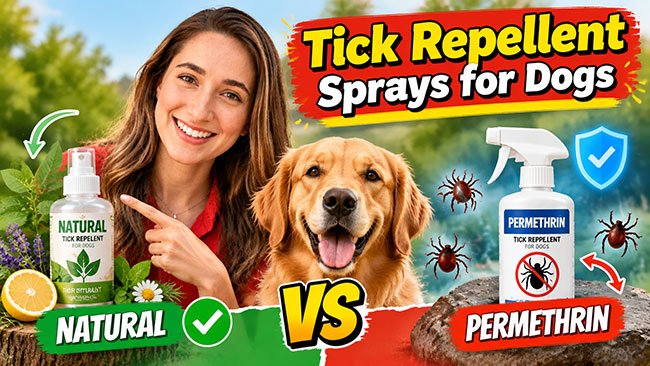
That has pushed a lot of dog owners into the repellent aisle, where the choice splits into two camps: natural sprays built on plant oils, and chemical sprays built mostly on permethrin. Both camps have loud fans. Here is the honest comparison.
How the two camps actually work
Permethrin is a synthetic version of a compound found in chrysanthemum flowers. It does not just repel ticks; it kills them on contact by attacking their nervous system. It bonds to fabric and coat, keeps working for days to weeks depending on the product, and it is the active ingredient in many EPA-registered sprays and spot-on treatments.
Natural sprays lean on essential oils: cedarwood, lemongrass, geraniol, peppermint, and similar. These work almost purely as repellents. Ticks find the scent disorienting or unpleasant and are less likely to latch on. They do not reliably kill ticks that do attach.
That single difference, kill versus discourage, explains almost everything else about when each one makes sense.
What the natural camp gets right
Plant-oil sprays are gentle enough for frequent reapplication, they smell like a spa instead of a chemical plant, and they are the reasonable default for households where a full-strength pesticide feels like overkill: city dogs, short leash walks, mowed yards.
Their honest weakness is staying power. Essential oils evaporate. A natural spray applied before a morning walk is doing noticeably less by the afternoon, so the routine matters more than the brand: spray before every outing, not once a week.
One more thing the natural camp deserves credit for: it forces owners to actually handle their dog daily, and hands-on time is how most attached ticks get found.
What permethrin gets right, and its one serious rule
For dogs that live in real tick country, hiking trails, tall grass, brushy fence lines, hunting fields, permethrin is simply the stronger tool. It kills ticks rather than negotiating with them, and a treated coat keeps protecting through days of exposure and even a swim or two.
The serious rule: permethrin is toxic to cats, especially in concentrated dog formulas. In a household with cats, either keep treated dogs separated until the application dries completely or stay in the natural camp entirely. This is the one place where getting it wrong has real consequences, so read the label like it matters, because it does.
Skin sensitivity is the other watch-item. A small patch test before full application is cheap insurance with any spray, natural ones included, since essential oils irritate some dogs too.
Choosing by lifestyle, not by ideology
Urban dog, sidewalk walks, groomed parks: natural spray before outings covers the realistic risk.
Suburban dog with a yard: natural spray daily plus a tick check at the door, and consider stepping up during peak months.
Trail dog, farm dog, hunting dog: permethrin-based protection, full stop, layered with whatever your vet already has the dog on.
Any dog on monthly vet preventives: sprays are a supplement to that foundation, not a replacement for it. The oral and spot-on preventives from your vet remain the backbone of tick-borne disease prevention.
The rest of the prevention stack
Sprays get the attention, but the boring layers do a surprising amount of the work. A nightly thirty-second tick check, ears, armpits, between toes, under the collar, catches most attached ticks inside the window before disease transmission typically occurs. Keeping grass short and leaf litter cleared shrinks the tick habitat in your own yard.
Overall health is a quieter layer of the same defense. Ticks and the diseases they carry hit hardest when a dog is run down, which is part of why senior-dog wellness has become its own category, from omega-3s to the newer longevity supplements like the one we examined in our PawPrint Protocol review. A well-supported immune system is not tick repellent, but it is the terrain the whole fight happens on.
None of that replaces a repellent, but a dog with a strong baseline plus a good spray plus a nightly check is playing defense in depth, and that is what actually keeps tick-borne disease off your vet bill.
The bottom line
Natural sprays are a real tool with honest limits: gentle, pleasant, short-lived, best for lower-risk dogs with consistent owners. Permethrin is the heavyweight: longer protection and an actual kill effect, with one absolute rule around cats.
Match the tool to the dog’s actual exposure, keep the vet’s preventives as the foundation, and do the nightly check no matter which bottle you buy. The best tick strategy is the one that runs every single day, not just on hiking weekends.