The Shelter Paperwork Says Your Kitten Is Vaccinated. Is That the Whole Story?
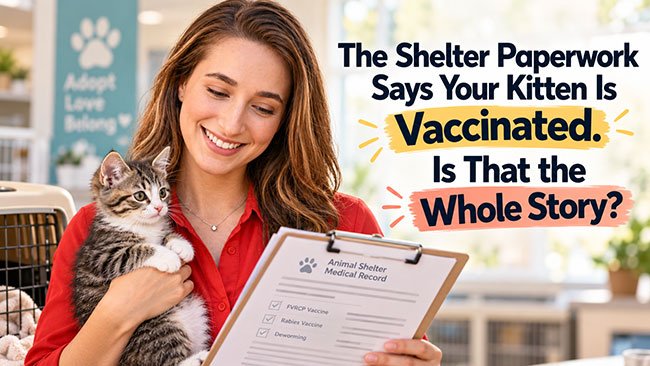
You brought your new kitten home with a carrier, a bag of food, and an envelope full of shelter paperwork. Somewhere between the adoption agreement and medical notes, you noticed a vaccination record. One box is checked, a date is written beside it, and everything seems in order.
Then you schedule your kitten’s first visit with your regular veterinarian. Instead of confirming that vaccinations are finished, the clinic tells you another appointment is due in a few weeks.
It’s a confusing moment for many new owners. After all, didn’t the shelter already take care of the shots?
The answer depends on your kitten’s age, which vaccines were administered, and whether the initial vaccination series has been completed. Understanding those details can help you avoid gaps in protection without repeating vaccinations unnecessarily.
The Word “Vaccinated” Can Mean Different Things on Adoption Paperwork
Shelters often vaccinate kittens as part of their intake and adoption procedures. These early doses are important, especially in environments where animals may have been exposed to infectious diseases before arriving.
However, a record showing that a vaccine was administered doesn’t necessarily mean the kitten has completed its recommended series.
What the First Recorded Vaccine Actually Confirms
Suppose your kitten received an FVRCP (feline viral rhinotracheitis, calicivirus, and panleukopenia) combination vaccine at eight weeks old. The paperwork documents that one dose was given, assuming the entry is accurate.
It doesn’t show whether the kitten completed the series or developed sufficient protection from that dose.
According to the American Animal Hospital Association’s feline vaccination guidelines, kittens generally receive FVRCP vaccinations every three to four weeks until they are at least 16 weeks old, with some schedules continuing through 20 weeks.
The number of doses depends partly on when the series begins. Two kittens adopted at the same age may therefore have different vaccination histories.
The Missing Details That Can Change the Next Appointment
Before filing away the shelter documents, look beyond the word “vaccinated.”
Check the vaccine name, administration date, your kitten’s age that day, and any follow-up date. The manufacturer’s name, lot number, injection site, and route may be available in the shelter’s medical record. AAHA/AAFP guidance recommends documenting these details. Also distinguish a dose actually administered from a future appointment or laboratory test.
If the paperwork contains only a handwritten checkmark or an unclear abbreviation, contact the shelter for clarification.
Consider a hypothetical record listing “FVRCP—8 weeks” and “FVRCP—12 weeks,” with the next-dose box blank. It documents two doses, but neither was given at 16 weeks or later. Ask whether another dose was administered elsewhere and have your veterinarian determine the next date. A blank box isn’t proof that a dose was missed.
Why Kittens Need Several Vaccinations While They’re Still Growing
It might seem unnecessary to repeat a vaccination when the first dose was administered only a few weeks earlier.
But the timing isn’t arbitrary. Kittens have a particular immune-system challenge during their first months of life.
How Maternal Antibodies Affect Early Vaccine Protection
Newborn kittens receive temporary antibodies through their mother’s first milk, known as colostrum. These antibodies can provide early protection against infectious diseases.
As kittens grow, that protection gradually decreases. The difficulty is that maternal antibodies can also interfere with certain vaccines, preventing the kitten from developing the intended immune response.
Veterinarians cannot reliably predict exactly when these antibodies will decline in an individual kitten.
The World Small Animal Veterinary Association’s 2024 vaccination guidelines explain why multiple doses are recommended during this period. Repeating vaccinations at appropriate intervals increases the chance that the kitten responds once maternal antibodies have decreased sufficiently.
Why the Final Kitten Dose Has an Important Timing Requirement
A kitten vaccinated at eight and twelve weeks may still require another FVRCP dose at sixteen weeks or later.
That later dose matters because maternal antibodies may have interfered with an earlier vaccination.
When reviewing a kitten’s shelter paperwork, owners should consider the number of recorded doses alongside general guidance on kittens vaccination protocol, while remembering that the timing and age at each dose matter more than the total count.
The AAHA/AAFP guidelines recommend considering an additional FVRCP dose at around six months to narrow a potential protection gap if maternal antibodies blocked an earlier dose.
The exact plan should reflect the kitten’s medical history, vaccine products, and individual circumstances.
What the Vaccination Record Should Show Before You File It Away
Not every vaccine protects against the same disease, and different vaccines have different schedules.
An adoption record may list FVRCP but leave rabies unmarked, or show “FeLV negative” without a FeLV vaccination entry. A negative test result is not the same as a vaccine dose.
Understanding FVRCP, Rabies, and Feline Leukemia Vaccines
FVRCP is a combination vaccine targeting three important feline infections:
- Feline viral rhinotracheitis, associated with feline herpesvirus type 1.
- Feline calicivirus, which can cause respiratory and oral disease.
- Feline panleukopenia, a potentially life-threatening viral infection.
Rabies vaccination is separate. The CDC advises following state and local rabies vaccination laws, which may apply even to indoor cats. Timing also depends on the vaccine’s approved label. Your local health department or animal control agency can confirm applicable requirements.
Feline leukemia virus (FeLV) vaccination also deserves attention. The AAHA/AAFP guidelines classify FeLV vaccination as core for kittens and young cats under one year of age. The initial series generally involves two doses, three to four weeks apart, beginning as early as eight weeks. The guidelines also recommend FeLV testing before vaccination.
Decisions about FeLV boosters later in life depend partly on exposure risk.
FVRCP usually protects well against panleukopenia, but its herpesvirus and calicivirus components primarily reduce illness rather than reliably preventing infection.
When the Shelter and Your Veterinarian Recommend Different Dates
Shelter vaccination schedules sometimes differ from those used for kittens living in private homes.
In shelters, infectious diseases spread more easily because kittens may have unknown histories and close contact with other cats. AAHA/AAFP guidance allows certain FVRCP doses as often as every two weeks in shelters, while schedules for kittens in homes generally use three- to four-week intervals.
The WSAVA guidelines also distinguish shelter vaccination protocols from household schedules. Different dates can reflect different exposure risks rather than an error.
A different appointment date doesn’t automatically mean the shelter made a mistake or the new veterinarian is recommending unnecessary treatment.
How Age, Prior Doses, and Exposure Risk Affect the Plan
Your veterinarian should review the actual dates and vaccine products before deciding what comes next.
A kitten vaccinated recently may need a follow-up dose at the appropriate interval. A kitten with incomplete records may need an individualized catch-up plan.
If an appointment has already been missed, don’t assume that the entire series must automatically restart. The appropriate response depends on the kitten’s age, the vaccine involved, how much time has passed, and the product’s recommendations.
The AAHA’s guidance on overdue feline vaccinations addresses how veterinarians assess delayed schedules.
Bring the shelter record to the appointment so the veterinarian can document any needed catch-up doses.
Keeping Your Kitten Safe While the Initial Vaccine Series Is Underway
Vaccinations are one part of protecting a newly adopted kitten. The household environment also matters, particularly before the initial series is complete.
Avoid unnecessary exposure to unfamiliar cats whose health and vaccination histories are unknown. Boarding facilities, shared animal spaces, and close contact with potentially ill cats may create avoidable risks.
If you already have cats, discuss their vaccination histories and your new kitten’s infectious-disease testing with your veterinarian before introducing them directly.
Introducing Other Household Pets Without Unnecessary Exposure
If your household includes a dog, remember that the dog’s vaccinations cannot protect your kitten from feline infections. Avoid close contact if either animal shows signs of illness.
Gradual, supervised introductions can still help both pets adjust. Discuss the kitten’s health and any recommended infectious-disease testing before allowing close contact.
Provide a separate, comfortable room at first, along with the kitten’s own food, water, litter box, and resting area.
Owners shouldn’t confuse sensible infection precautions with complete isolation. Gentle handling, positive experiences with people, and practice entering a carrier remain valuable during kittenhood.
The goal is to reduce unnecessary infectious-disease exposure while allowing normal social development.
The Next Appointment Is Part of the Adoption Plan
Before leaving the veterinary clinic, ask for an updated record separating confirmed doses from uncertain entries and showing what remains due. Have the clinic record the next appointment date.
Confirm the next appointment date, whether additional FeLV testing or vaccination is recommended, and when your kitten can safely encounter other cats or visit shared animal environments.
Ask about possible vaccine reactions, too. AAHA/AAFP guidance notes that mild tiredness, temporary soreness, or a short-lived decrease in appetite can occur. Contact your veterinarian about persistent or worsening symptoms. Facial swelling, difficulty breathing, collapse, or repeated vomiting require urgent veterinary attention.
Keep the latest vaccination record somewhere accessible rather than buried with the original adoption documents. You’ll likely need it for future veterinary appointments, boarding arrangements, or other situations requiring proof of vaccination.
The shelter’s paperwork is a starting point, not necessarily a completed vaccination history.
Your veterinarian can compare each recorded dose with your kitten’s age, health, and living environment, then identify any missing information or doses still due.
An accurate record and a clear follow-up plan help prevent missed doses without repeating vaccinations unnecessarily.